
Winnie’s Pleasure
Concord Brentwood, Burnaby, British Columbia, Canada
2024
Aluminum canoes, stainless steel armature, stainless steel wire cable and concrete plinth
480 x 492 x 480 inches (1219.2 x 1249.7 x 1219.2 cm) 40 x 41 x 40 feet (including plinth)
Approx weight: 30,100 lbs.
Photo: Brian Guido
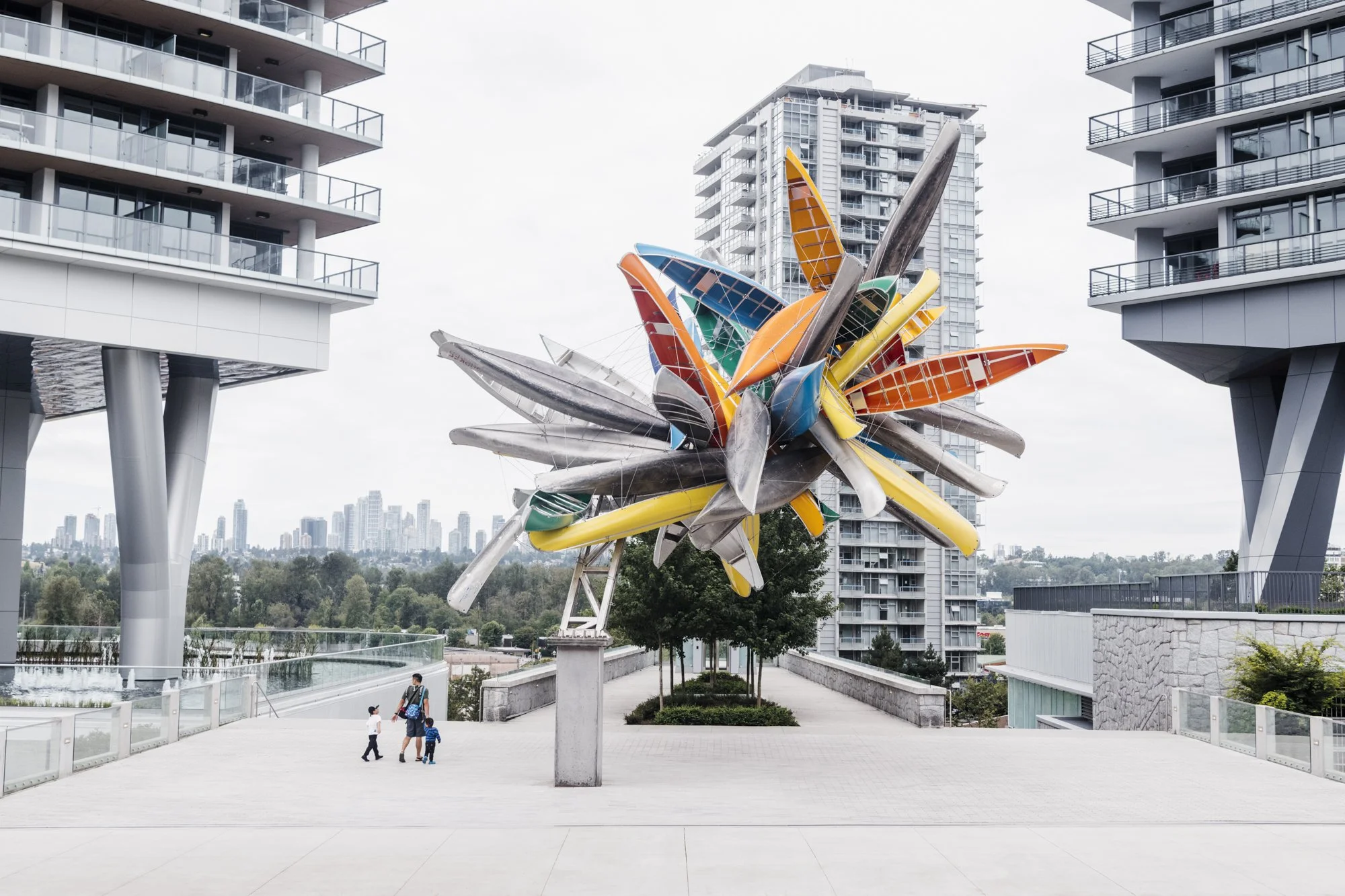
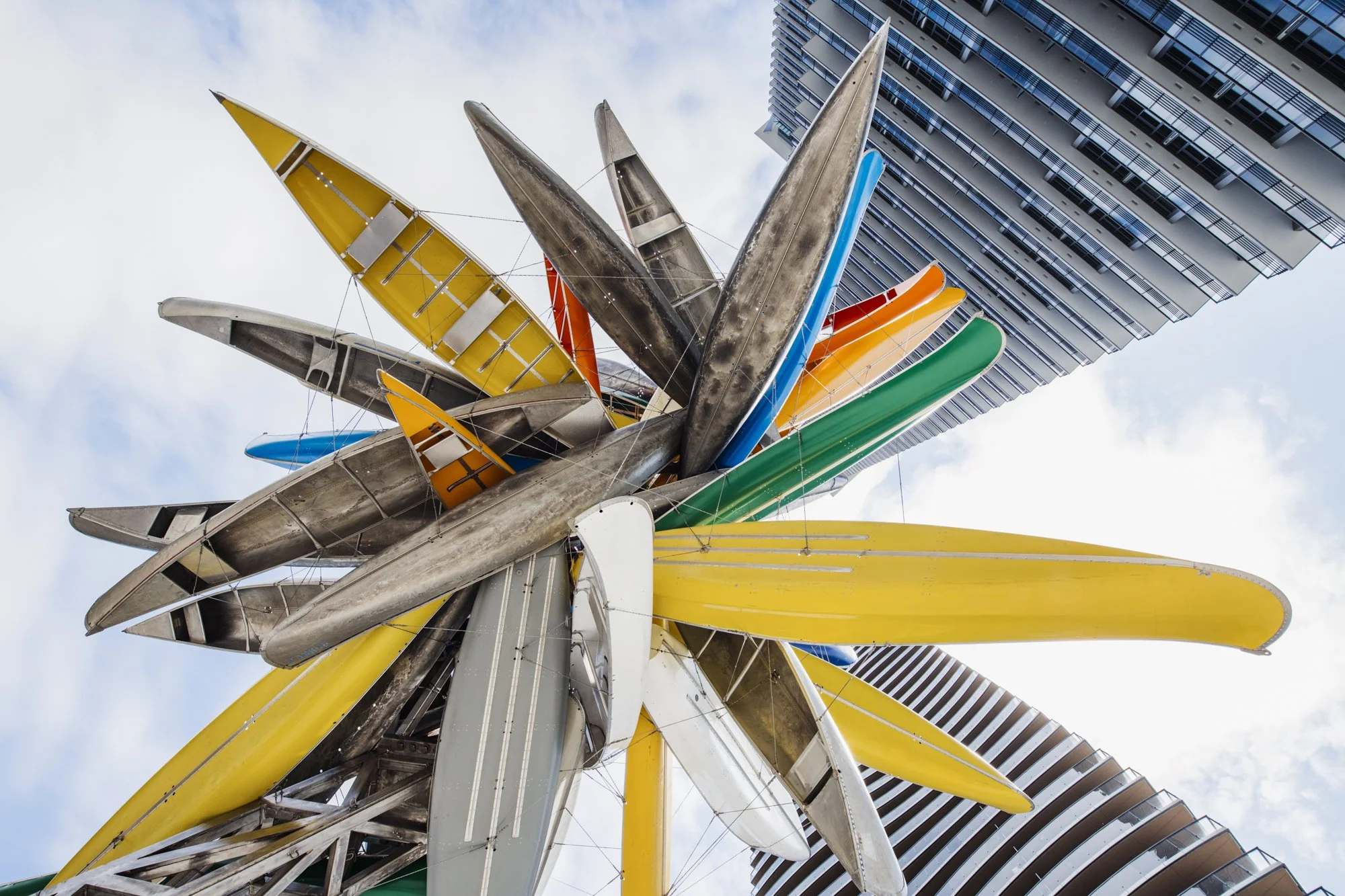
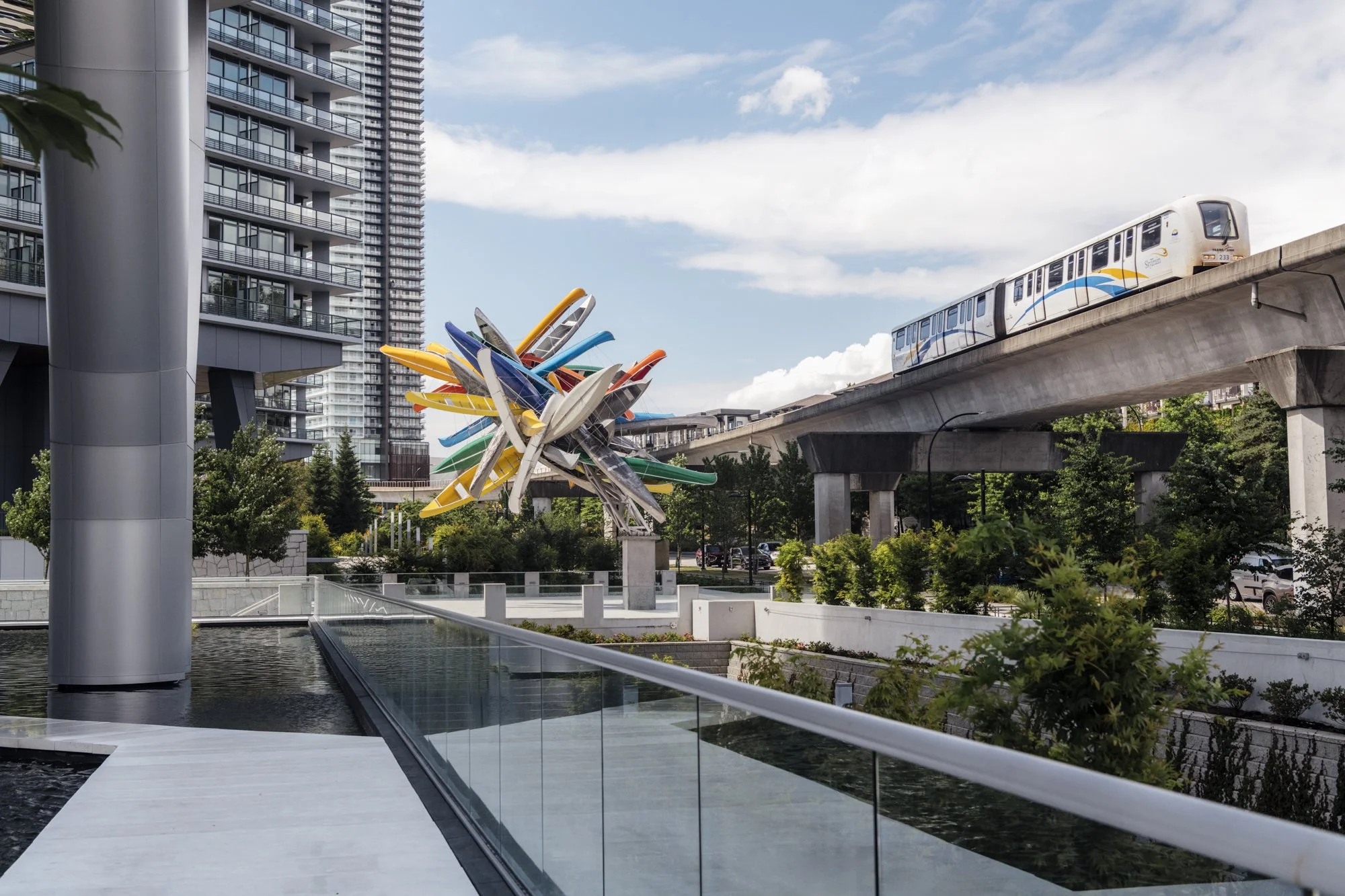
Canada is home to Winnie’s Pleasure (2024) by Nancy Rubins, a newly commissioned sculpture by Concord Brentwood. Located in the municipality of Burnaby, part of Vancouver’s growing metro area, the site is surrounded by abundant parks, creeks, and lakes, fit for outdoor recreation such as hiking and canoeing. The artwork is prominently displayed in a public plaza bordered by three Concord Brentwood residential towers designed by James KM Cheng Architects and Francl Architecture.
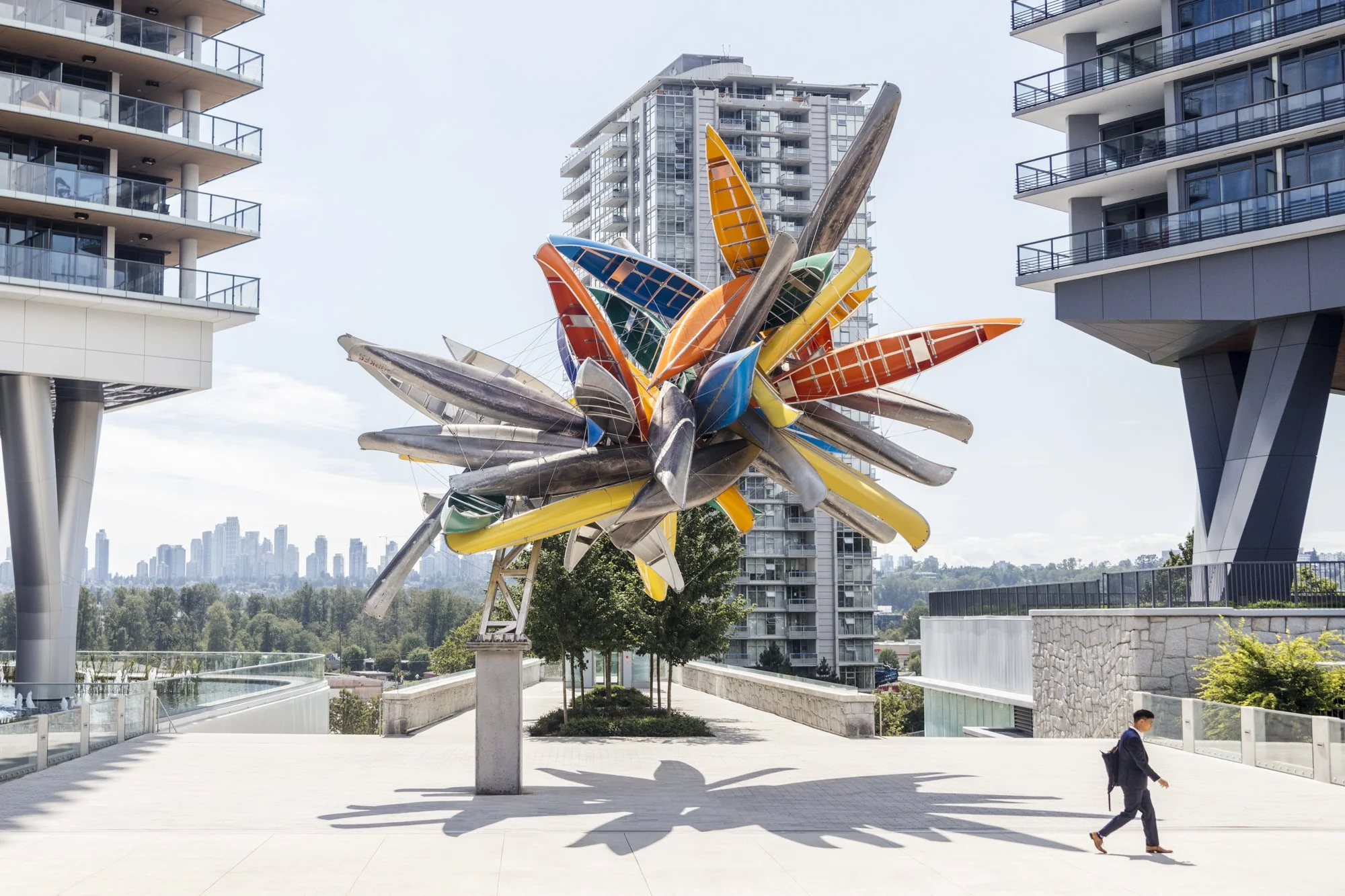
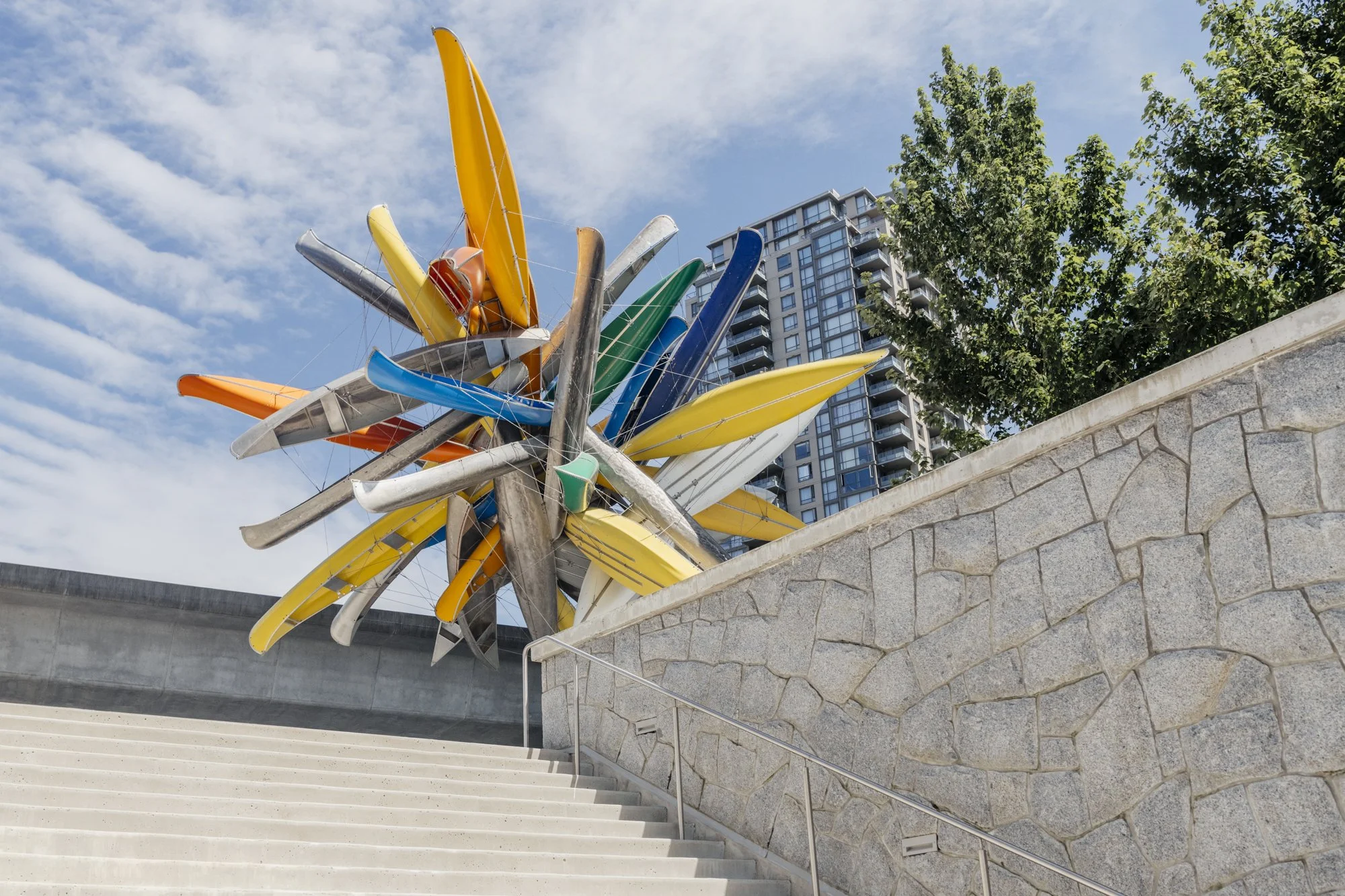
Rubins’ sculpture offers an explosive pop of color to contrast against its neutral grey environment, reflecting the sophistication of glass, concrete, and steel of the surrounding grid-like towers and urban landscape. The whole sculpture appears to dive forward in space: like a tree, its structure is propelled to grow upwards while rooted to the ground, as if guided by the sun. Its commanding silhouette stands erect, carving out negative shapes against the backdrop of the sky. Found canoes of varying colors and scale make up the sculptural forms clustered together, challenging gravity. These industrially-fabricated metal canoes painted in smooth hues of yellow, blue, green, white, yellow, and orange, alternate with older aluminum canoes, the latter glistening with changing natural light. At times, the light reveals faded letters on the canoes’ sides, and one can decipher names such as “River’s Edge,” hinting at the vessels’ past lives.
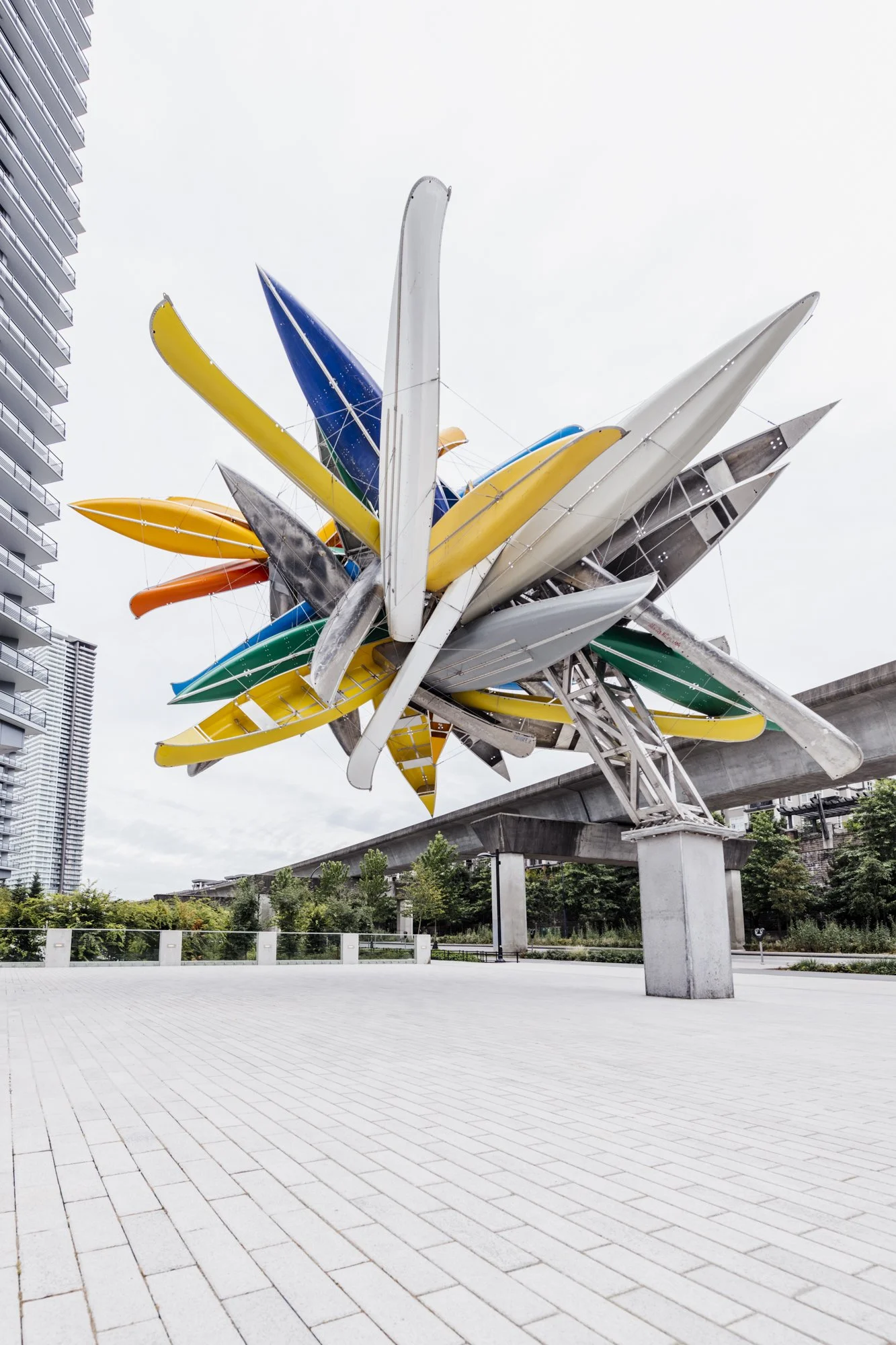
Each canoe has been repeatedly punctured with holes through which light passes, also acting as drainage holes for possible rainfall. They allow for the taut, twisting metal wires to gather the canoes together and hold them in place, tightly bound against one another. The wires are key to the sculpture as they express the most tension while also denoting lines in space, akin to a three-dimensional drawing where the eye can follow their direction and movement. Together the canoes explode away from the center point that brings them together, forming a starburst, a nova, perhaps something we feel inside or can observe in a short instant, like a shattering star. We feel the power of gravity as if canoes were to accumulate below a waterfall after launching off a high cliff. Tension frees itself from its highest concentration in the cluster’s middle and dissipates into its outer reaches, into space.
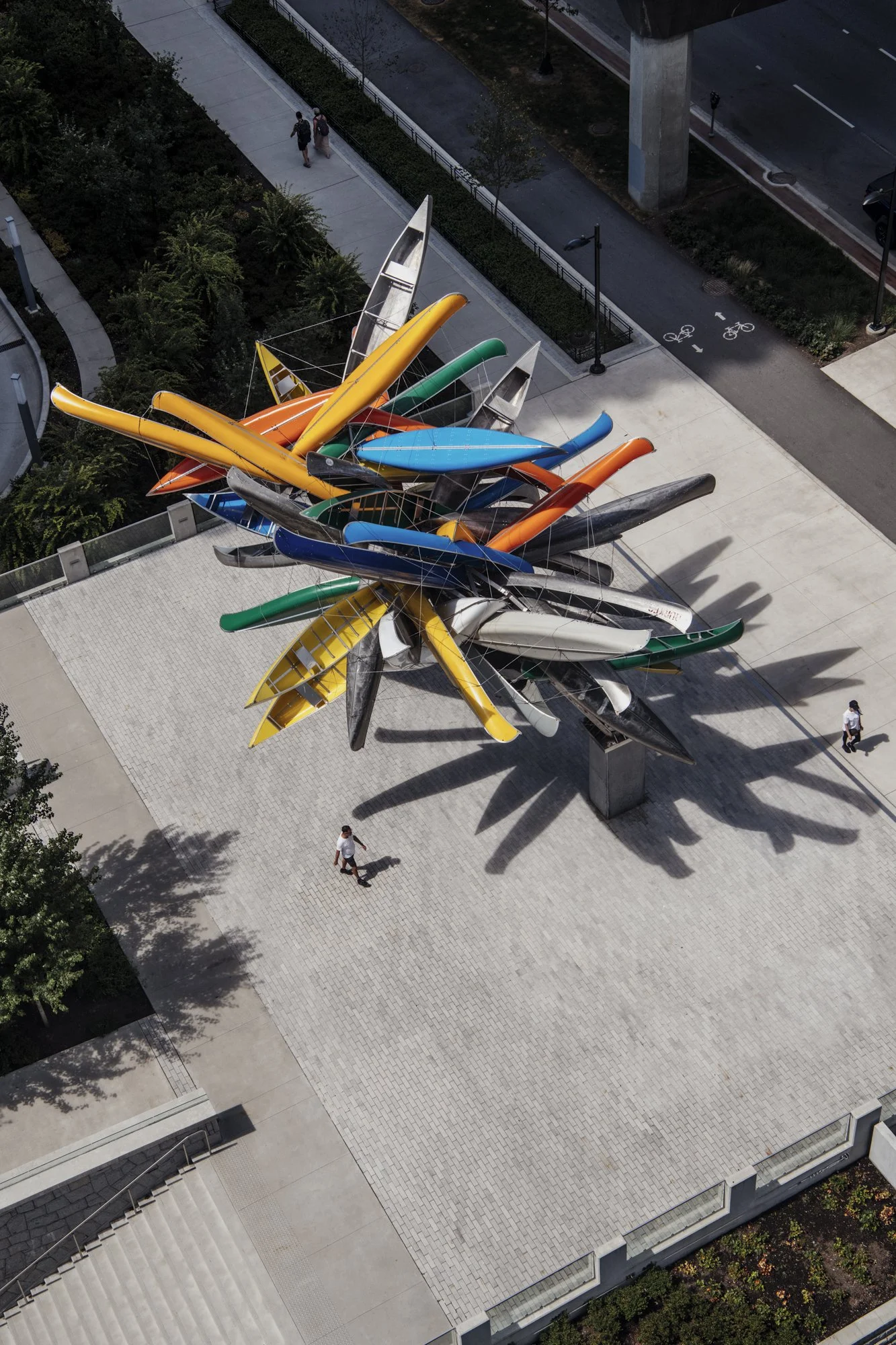
The sculpture transcends its main material, the canoe, and we can let go of its associations as the entirety feels as light as the buoyant potential of water or air for a plane in flight. Yet the curves of the canoes are a suitable complement to the wavy forms observed on the façade of the residential towers. These oblong pointed shapes are familiar to the Pacific Northwest, where water holds special meaning, both as an element conducive to recreational outdoor activity such as canoeing with friends and family, but also as an object embedded in the traditions of Native populations, who would once make canoes from a single log with their communities and employ them for transportation and fishing. In daylight, we see the flattened-out shapes of these forms in the sculpture’s shadows appearing on the ground, and these recall Rubin’s collages, an extension of this work into the two-dimensional realm.
The sculpture sits on an elevated concrete plaza landscaped with a shallow fountain, curated gardens, elevator, and stairs overlooking the skyline of nearby cities. It is viewable from multiple perspectives: the plaza is flanked by cars racing nearby on Lougheed Highway, the route to downtown Vancouver, and sight of the sculpture can be caught from public transportation above on the Skytrain as well as on the ground level from sauntering pedestrians and cyclists. The steel beam and concrete base are the core structure holding the canoes and wires in place and these dialogue with the many cranes and urban machines permeating our urban landscapes, where cities expand continuously under the wing of construction. Walking around the sculpture,one can feel its architectural scale from different vantage points. Its momentum points forward like a diving board towards one of the Concord Brentwood residential towers due to its cantilever configuration. The towers are vertical in contrast to Winnie’s Pleasure, where its unique movement and projection into space carry the freedom of a high diver on a springboard.
Text by Amanda Millet-Sorsa (August 2024)
Related works
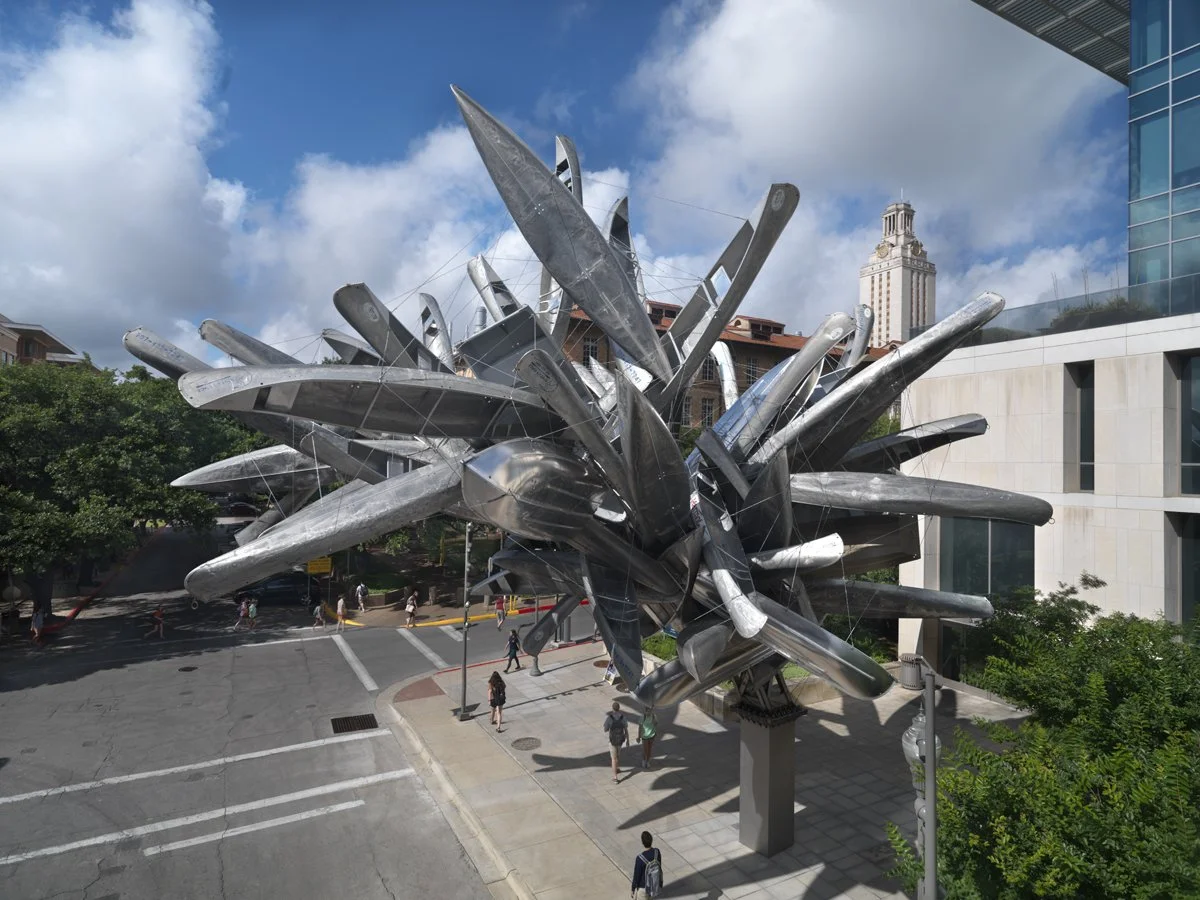
Monochrome for Austin, 2015 University of Texas at Austin, Austin, TX
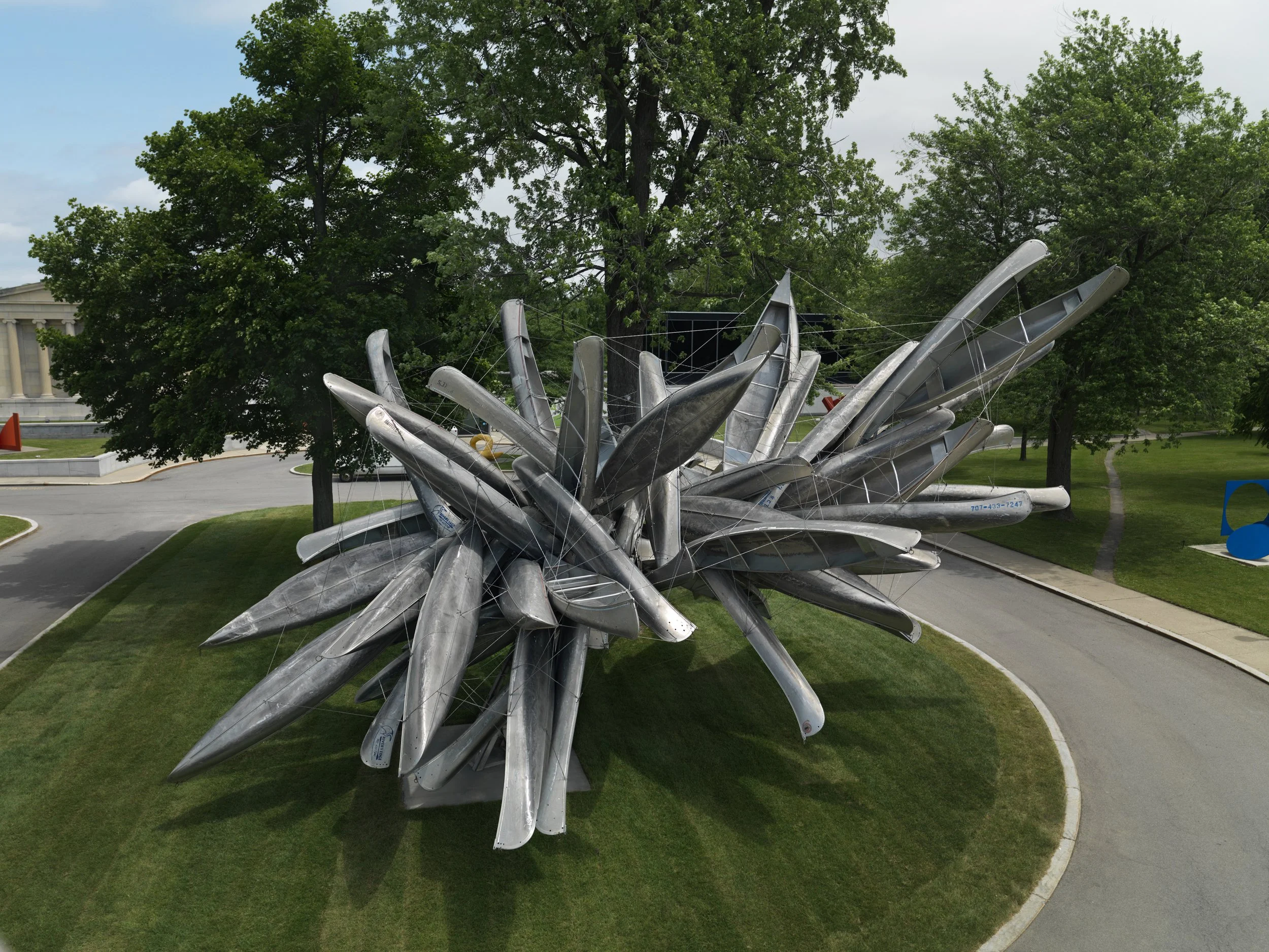
Monochrome I, Built to Live Anywhere, at Home Here, 2011 Buffalo AKG Art Museum, Buffalo, NY
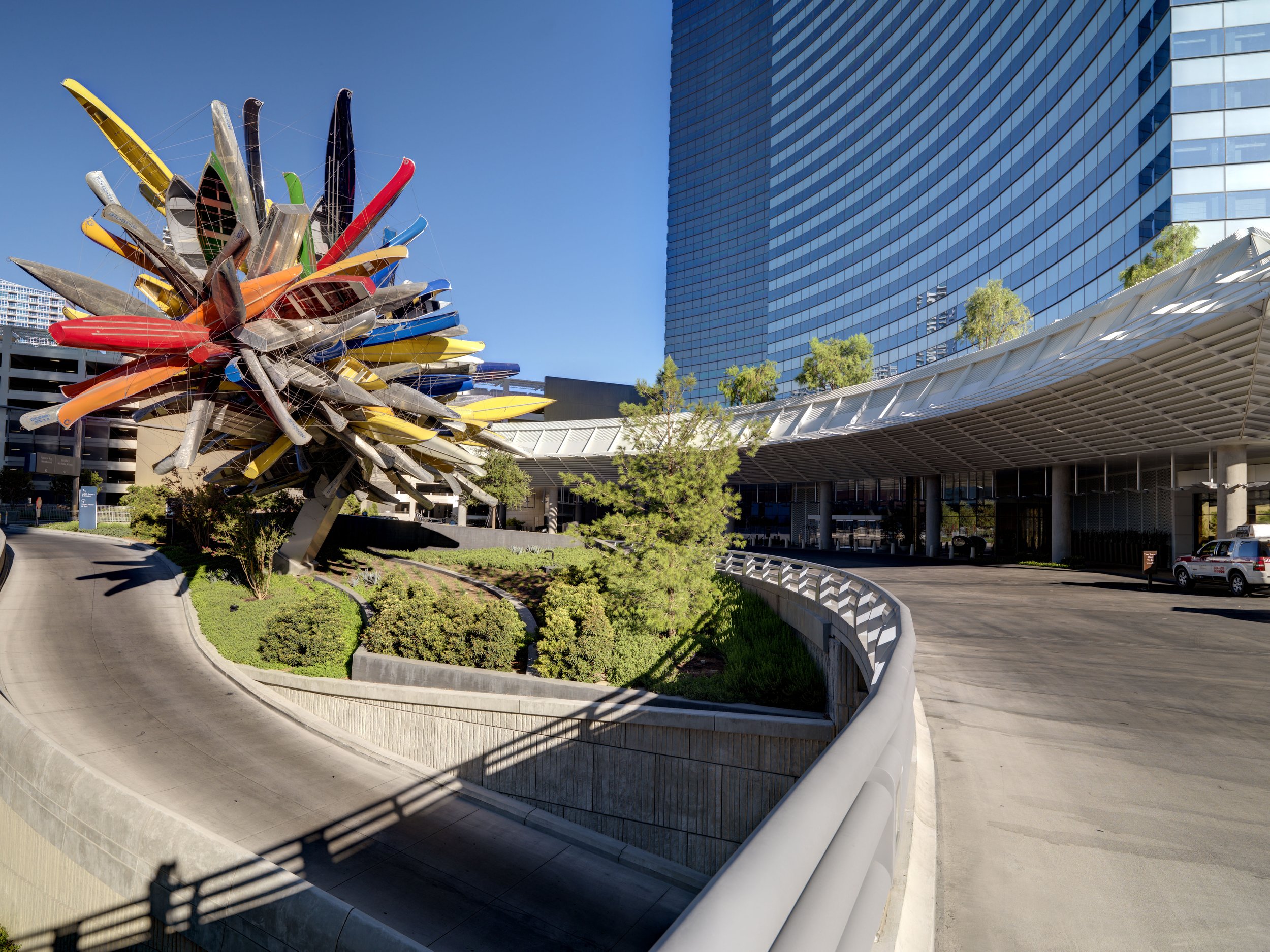
Big Edge, 2009 MGM Resorts International, Las Vegas, NV
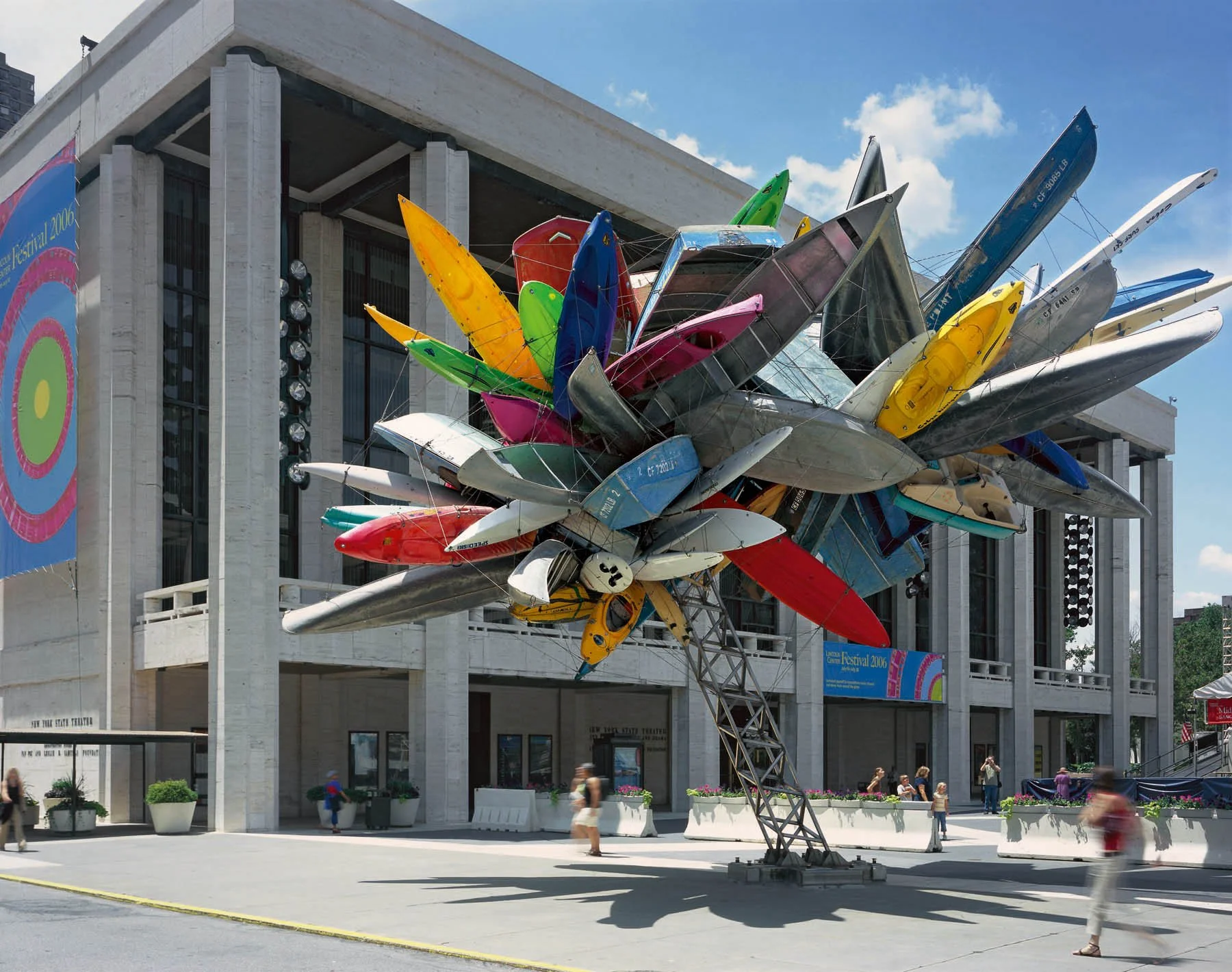
Big Pleasure Point, 2006 Lincoln Center, New York, NY